English


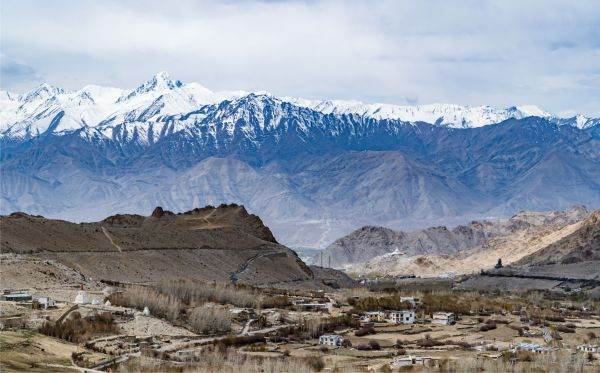
Himalayan glaciers are melting faster than they were a decade ago, and the region is approaching a critical threshold for water supply security, according to a study published this month. Researchers warn that "peak water"-the maximum volume of meltwater- could be reached by the middle of the century, after which river flows are expected to decline, Reuters reports. The study was conducted by the sustainability consultancy Systemiq, in collaboration with the Integrated Mountain Initiative, the International Centre for Integrated Mountain Development (ICIMOD), and India's G.B. Pant National Institute of Himalayan Environment. The research was presented against the backdrop of a glacier collapse in late August along the Nepal-Tibet border. That event triggered cascading landslides and flash floods in downstream valleys, resulting in at least 1,300 confirmed deaths and over 5,300 people reported missing across Nepal and China's Tibet region, according to Reuters.
• Glaciers leave behind unstable lakes
As glaciers retreat, they leave behind unstable glacial lakes held back by rock and ice formations that are prone to collapse. These bodies of water sit above valleys inhabited by millions of people, heightening the risk of devastating floods and torrents. Mass loss from Himalayan glaciers has accelerated in recent decades. Currently, only 21 of the estimated 40,000 glaciers in the Hindu Kush-Himalaya region-a vast mountain system spanning eight countries from Afghanistan to Myanmar-are being monitored on the ground.
• Nearly 200 high-risk glacial lakes in India
In India, nearly 200 glacial lakes have been identified as posing a high risk. Of these, 56 fall into the "very high risk" category, with millions of people living downstream exposed to potential outbursts. The report warns that the region is approaching "peak water"-the point at which river water supply reaches a maximum before flows begin to decline. This trend could have major consequences for water supply, agriculture, energy production, and economic activities in states dependent on Himalayan water resources.
• A vital role in India's economy
The Himalayan region supports over 20% of India's Gross Domestic Product and constitutes a crucial component of the national economic infrastructure upon which hundreds of millions of people depend. Although the Himalayan zone accounts for approximately 18% of India's territory, it has been affected by about 35% of the natural disasters occurring in the country, according to the report. Systemiq notes that the report, titled "Prosperous and Resilient Himalayas," was prepared prior to the August disaster and has been released in an abridged format ahead of the full version's launch in October. The document proposes a development model focused on protecting natural systems, strengthening resilience, and fostering sustainable prosperity. Researchers emphasize the need for greater investment in glacier monitoring, the identification of hazardous glacial lakes, and the development of effective early warning systems. The warning regarding the approaching "peak water" volume highlights the fact that accelerated glacier melt implies more than just a temporary increase in river flow. In the long term, the depletion of ice reserves could lead to a reduction in the water available to downstream communities and economies.


























 Euro
Euro Dolar SUA
 Franc elveţian
 Liră sterlină
 Gram de aur